

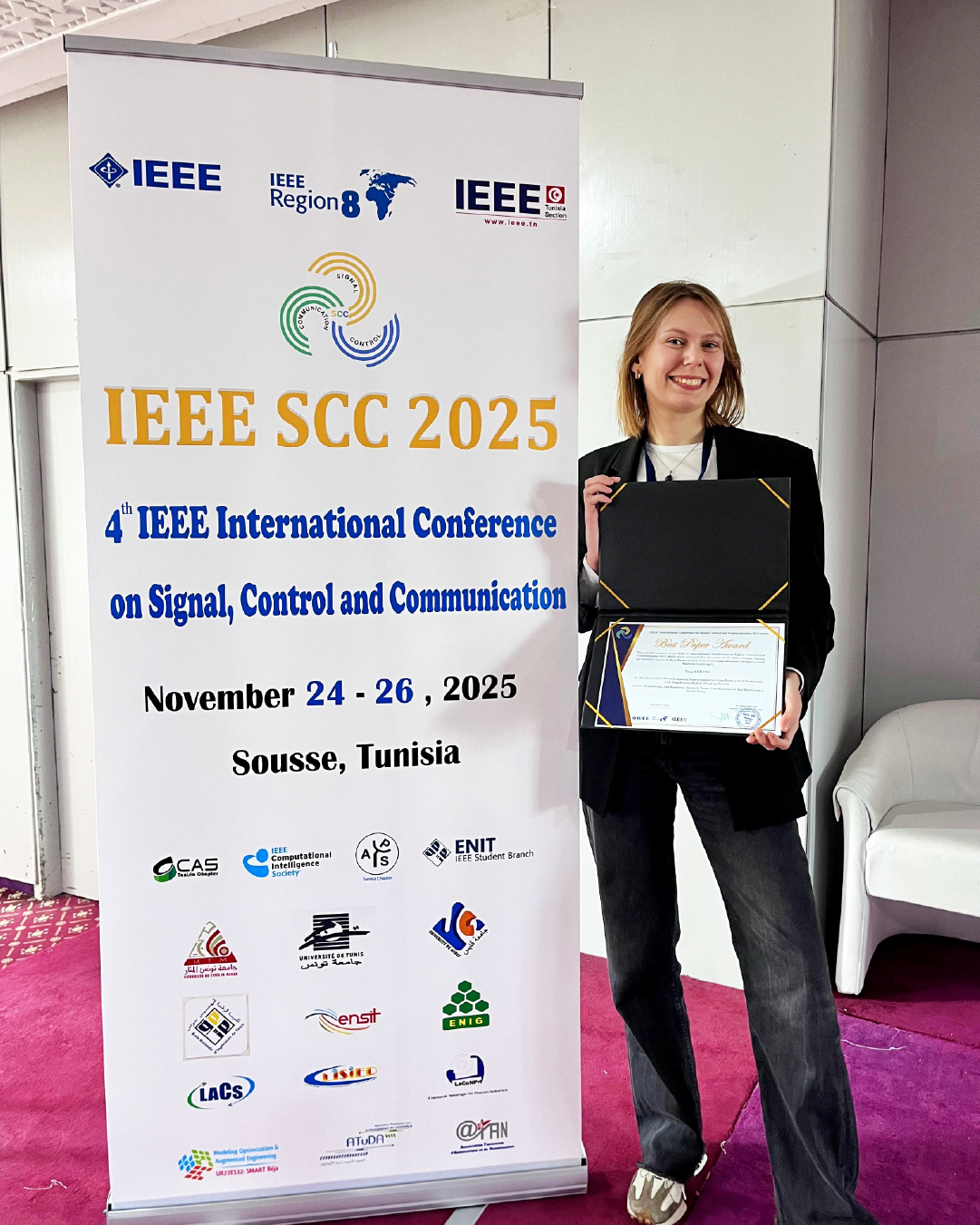
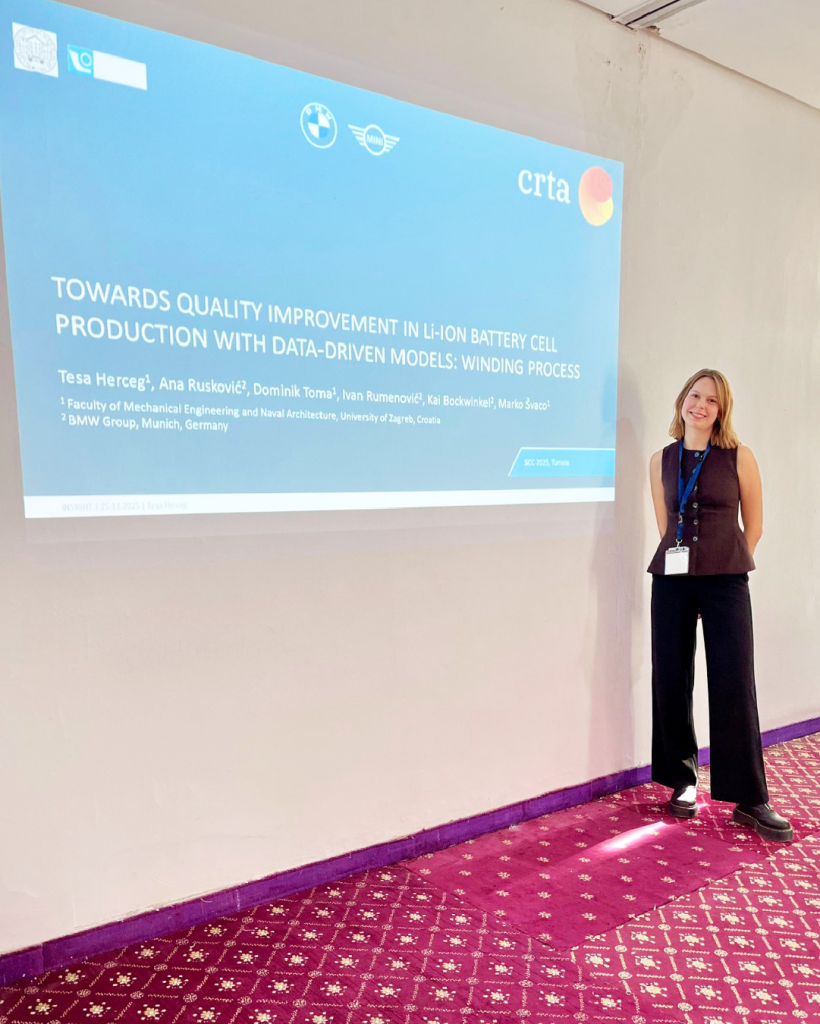
At an international conference 4th IEEE International Conference on Signal, Control and Communication (SCC 2025), held in Sousse, Tunisia, our researcher and PhD student Tesa Herceg participated in and presented research conducted as part of the project INSIGHT (Intelligent data models for the production and recycling of battery articles) between the University of Zagreb, Faculty of Mechanical Engineering and Naval Architecture and the BMW Group Battery Cell Competence Centre (BCCC).
SCC 2025 provided a platform for academic researchers and industrial engineers to exchange original ideas, successful practices and advanced knowledge in the fields of dynamic systems control, electronics and microelectronics, communications, signal processing, smart grids and computational intelligence. The technical program of the conference included the presentation of accepted papers highlighting technological advances and applications in various fields of electrical engineering.
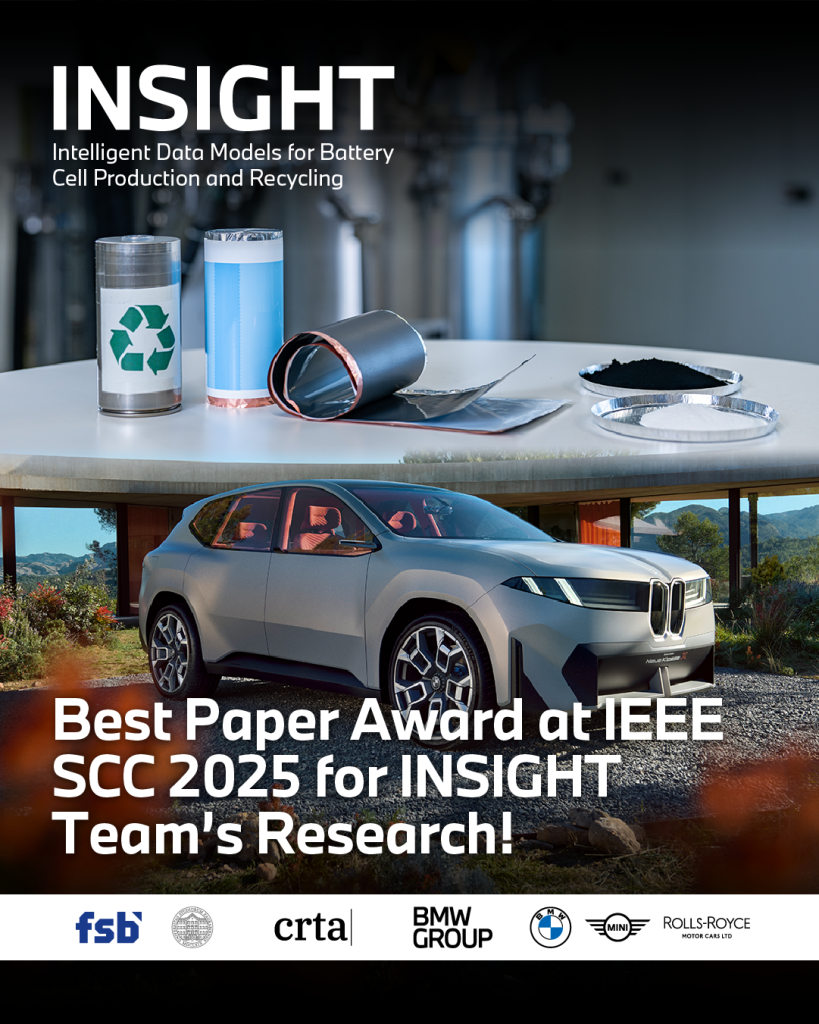
Tesa participated in the section Computational intelligence and machine learning, where she won for her research contribution award for best work.
Her work, Towards Quality Improvement in Li-ion Battery Cell Production with Data-Driven Models: Winding Process, presents new methods for improving the production of lithium ion battery articles using data analytics and machine learning.
The paper focuses on the winding process, which is an important step in the production of cylindrical battery cells, where precise control of machine parameters is necessary to achieve high-quality intermediate products, „jelly-rolls“, which directly affect the final cell quality. In the paper, a predictive model is developed that determines the optimal initial machine settings by integrating the characteristics of the input materials, process parameters and target „jelly-roll“ features. The best performances were achieved using the algorithm Random Forest Regression, with achieved R² = 0.976.
These results contribute to the development of intelligent, data-driven manufacturing systems, reducing the need for manual machine adjustments, shortening the setup time of experimental processes, and reducing the proportion of scrap in pilot production.
In addition to the scientific program, the conference also included various events that connected researchers, professors, and industry experts, providing insight into the latest trends and challenges in the field of computing and industrial digitalization.




 The project was co-financed by the European Union from the European Regional Development Fund
The website was co-financed by the European Union from the European Regional Development Fund.
The content of the website is the sole responsibility of the Faculty of Mechanical Engineering and Naval Architecture.