

Development of digitally controlled innovative services of welding and grinding of tubular bodies of irregular shapes
The project is carried out with the aim of using modern technologies in the design and development of innovative solutions that will speed up and automate welding services and rough and precise grinding in the production of tubular bodies of irregular shapes. Traditional metalworking approaches are often complex, demanding and error-prone, which can result in inconsistent fabrication and reduced machining quality. The project represents a sophisticated approach in the metalworking industry, using advanced technologies and introducing innovations in the production process, with the aim of developing and establishing services.
Project description
Implementation period: 2024 – 2027.
Total project amount: 2,969,939.06 EUR
Financing: ESI ERDF – European Regional Development Fund
Project coordinator: Color Enamel Ltd.
Partners: University of Zagreb, Faculty of Mechanical Engineering and Naval Architecture, TTT Stela doo, Proton EE-Elektronika doo.
Goals
The project will develop two innovative services in the regional value chain of Smart and Creative Industries, within the priority niche of Manufacturing Technologies and Models for Industry 4.0 (robotics and advanced manufacturing systems). The aforementioned innovative services are as follows:
1. Digitally controlled welding service for irregularly shaped tubular bodies
2. Digitally managed service of rough and precise grinding of tubular bodies of irregular shapes
Challenges
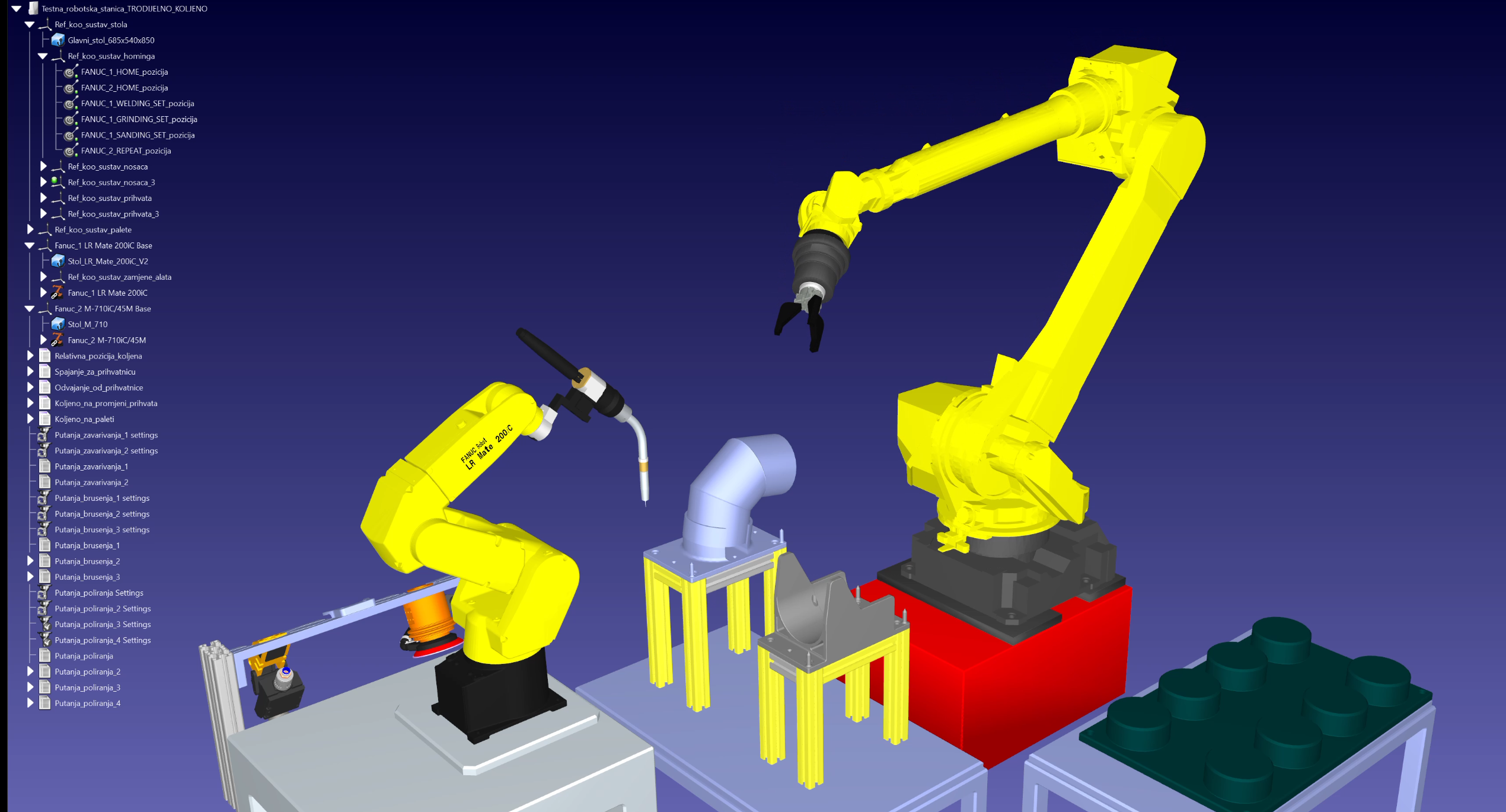
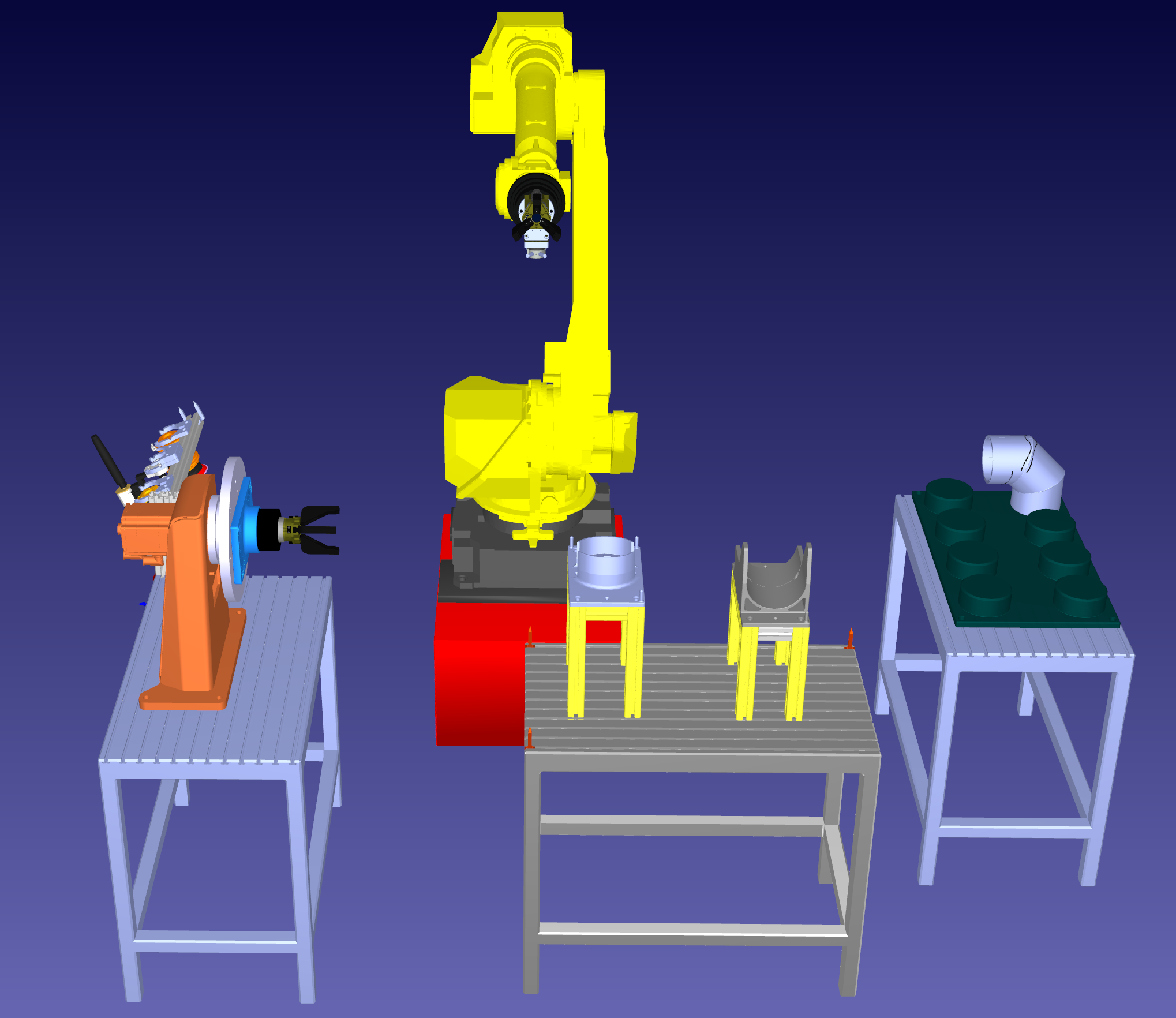
The project focuses on solving the problem of grinding and welding hard-to-reach places and corners in irregularly shaped tubular bodies through two key services. Currently, there is no welding and grinding service for irregularly shaped tubular elements that would enable work in extremely inaccessible places and at various angles. The activities envisaged by the project relate to the exploration of possibilities and the implementation of modern technologies such as robots, sensors, cameras and software components in order to develop innovative services that would automate welding and grinding services in the production of irregularly shaped tubular bodies.
Welding
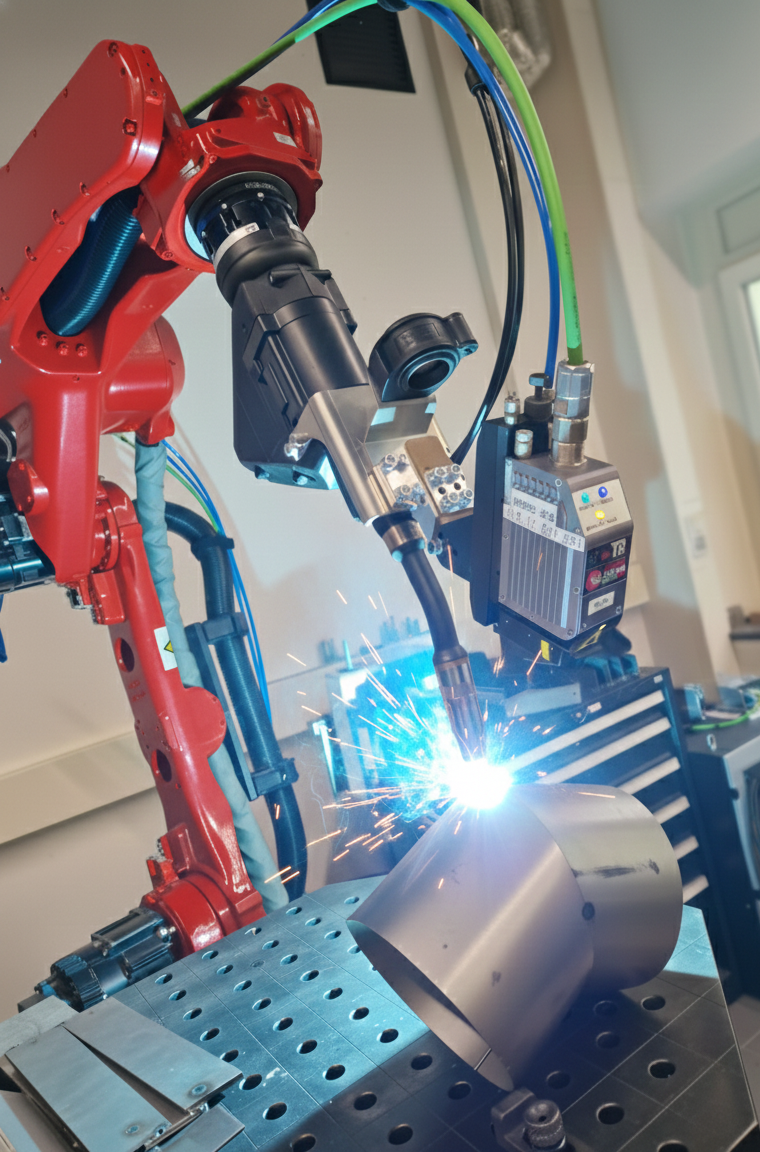
The welding service is performed using a robot equipped with sensors and cameras. The robot precisely holds the pipe, recognizes its shape and dimensions, and accurately determines the welding location. Sensors and cameras give the robot clear instructions on the material and position of the weld, enabling optimal welding performance. This approach reduces the need for manual work, reduces the possibility of errors, and increases the efficiency of the process, especially when welding hard-to-reach corners. The innovation of the service of welding irregularly shaped tubular bodies is based on the application of advanced modern solutions such as robots, sensors, and cameras. Sensors and cameras greatly change the standard welding process, enabling generative computer models to accurately recognize the shape and dimensions of tubular bodies. This enables accurate and consistent welding because the sensors and cameras give the robot clear instructions on the material, shape, and location of the weld. Traditional welding requires workers with extensive experience and significant time to adapt to a particular business process, while the use of modern technologies reduces the need for manual work, the possibility of errors, and increases the speed and efficiency of the process, as well as the quality of the final product. Sensors and cameras enable real-time adjustment and quality control, ensuring consistent weld quality despite the complexity of the pipe shape.
Grinding
The service of rough and precise grinding of tubular bodies of irregular shapes represents another key innovation, using advanced robotic solutions equipped with sophisticated software components that allow adaptation to different types of materials and shapes. The grinding service is realized using an advanced software algorithm that creates a solution for each specific pipe shape at the beginning of the process. The algorithm determines the best possible combination of parameters for the grinding performed by the robot. This technology enables precise grinding of hard-to-reach places and corners, reducing the risk of injury and worker overload.
Robotic grinding ensures smooth and uniform surfaces, optimizing the speed and pressure of grinding for each specific part, thereby improving the quality of the final product. Traditionally, grinding has been a physically demanding process with high occupational risks for workers, especially when working with irregular shapes. The biggest challenge that arises through the grinding service is the process of grinding hard-to-reach places, i.e. grinding angles of various sizes in tubular bodies of irregular shapes. This innovation addresses these challenges by applying modern technologies, enabling grinding hard-to-reach places at different angles, which significantly improves the quality of the final product. Software algorithms optimize the speed and pressure of grinding, resulting in smooth and uniform surfaces and reducing the need for subsequent corrections. Generative computer models adapt the grinding to the specific geometric requirements of each part, while high-resolution cameras and sensors monitor the process in real time and adjust it as needed.
Realization
The implementation of these innovative services greatly improves working conditions, reducing workers’ physical strain and exposure to hazardous substances, which increases safety and reduces the risk of injuries. In addition, advanced data analytics plays a key role in these innovations. Using data and artificial intelligence, processes are continuously monitored and analyzed to identify opportunities for further improvements. This approach enables predictive maintenance and reduces unplanned downtime, further increasing system efficiency and reliability. Data collected during the service execution process, including the duration of grinding and welding processes, the number of errors, and parameters such as temperature, pressure, and vibration, are analyzed to identify bottlenecks and optimize cycle times, leading to increased productivity. Based on the collected data and its analysis, systems can automatically adjust process parameters, ensuring consistency and quality. These innovations improve technological aspects of production and enable the development of new business models and a rapid response to specific customer requirements and market changes. Close cooperation with research institutions and continuous education of employees ensure the rapid integration of the latest knowledge and technologies into production systems, thus ensuring a competitive advantage in the market.
Global influence
The development of automated welding and grinding services brings innovation that will significantly impact the global market and potentially transform manufacturing practices across industries.
Automated grinding and welding services for hard-to-reach places enable precise processing inside tubular bodies and inaccessible parts of structures. By contracting the services in question, future customers will receive a higher quality final product that meets the requirements of their end customers. This will make them more competitive in the market, even those companies that do not have their own know-how, by contracting the services in question, will contribute to their own product development for the benefit of future customers.
Automation of services will also contribute to reducing resource consumption and waste, which will have a positive environmental impact. The innovation of automated precision grinding in the production of irregularly shaped tubular bodies represents a significant advance in the industry. Instead of manual grinding, which can be time-consuming and expensive, these innovative services use modern technologies to precisely grind tubes with minimal human intervention. This results in a uniform and high-quality end product.
The result of these research and development project activities represents an innovation for the global market, as it will enable the production of high-quality tubular bodies with greater efficiency and competitiveness in the global market. Automated welding and grinding services will not only improve product performance and quality, but will also allow companies to be more competitive on a global scale, attracting new customers and expanding their market share.
The results of this project have wide application and can be used in various industries dealing with similar production concepts such as the automotive industry, the construction industry and the air conditioning and ventilation industry. By using modern technologies, these services enable faster, more precise and more reliable production systems, thus setting new standards of quality and efficiency. Ultimately, the results of this project represent a significant step forward for Industry 4.0, offering advanced technological solutions that can be the basis for further development and innovation in various industries on the global market.
Targeting a group
The target groups of this project, which will be directly affected by the project activities, include all members of the SPIN consortium, which includes three companies and a scientific research institution. The project activities will have a significant impact on the companies, members of the SPIN consortium, with the aim of increasing their innovative capacity.
Also, the project activities will result in the creation of new innovative services within the priority niche of the Regional Value Chain of Pannonian Croatia, an increase in the number of employees, growth in income, accumulation of new knowledge, increased competitiveness and permanent improvement of relations and cooperation with the scientific community. The scientific and research institution within the SPIN consortium will, through participation in the project, get the opportunity for further research, development and application of scientific knowledge in the real sector. Their cooperation will result in the application of research and development results in the industrial environment.
Impact on the wider community
The project has a significant socio-economic impact. By creating new jobs and encouraging cooperation with local suppliers and entrepreneurs, the project contributes to the sustainability of the local economy and strengthens the industrial competence of the region. By encouraging cooperation with local suppliers and entrepreneurs, the project promotes the growth and development of the entire local ecosystem. This not only strengthens the local economy, but also raises the general level of industrial competence in the region.
The project supports the strategic goals of the wider economic community through the improvement of technological infrastructure and capacities. The introduction of advanced technologies not only increases productivity and efficiency, but also creates the foundations for further innovation and development of new services.
Improving production can contribute to a better positioning of the company on the international market, encouraging exports and international cooperation. The project not only strengthens the position of the Applicant within the relevant industrial niche, but also from the aspect of the regional value chain, by implementing innovative technologies it actively contributes to economic development and social cohesion at the regional level, promoting innovation and technological progress as key factors for long-term economic growth.
Investment in innovation development is a project that places the Applicant at the centre of technological evolution within the industry and encourages the development of strategic partnerships with private entities and research institutions. This collaboration provides access to the latest scientific achievements and technological innovations, which further strengthens the capacity for the development of innovative services. The results of the project could lead to technological development at the local level. The project also provides educational opportunities through partnerships with educational institutions, allowing students to gain practical experience and skills for future careers in high-tech sectors.
Gallery
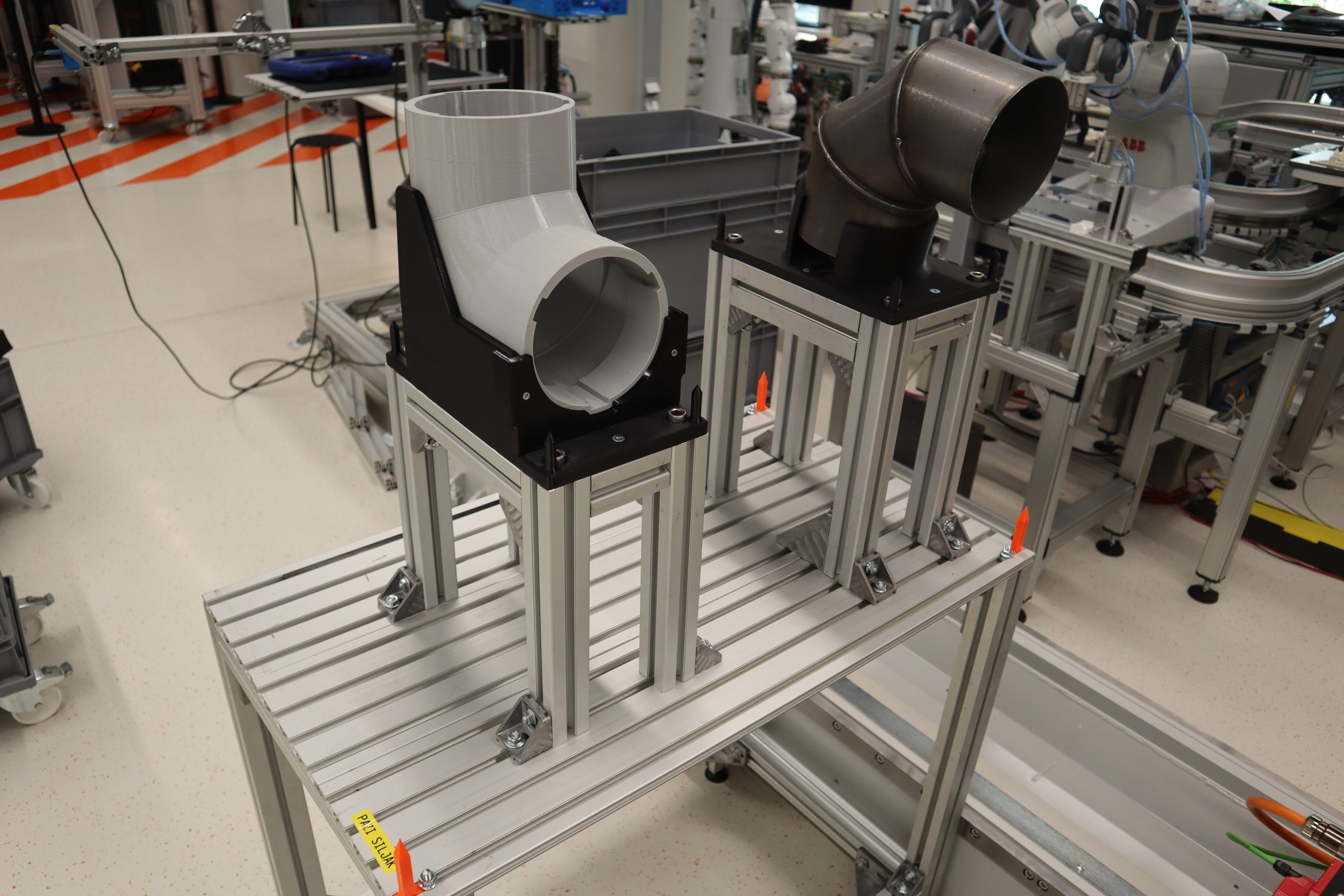
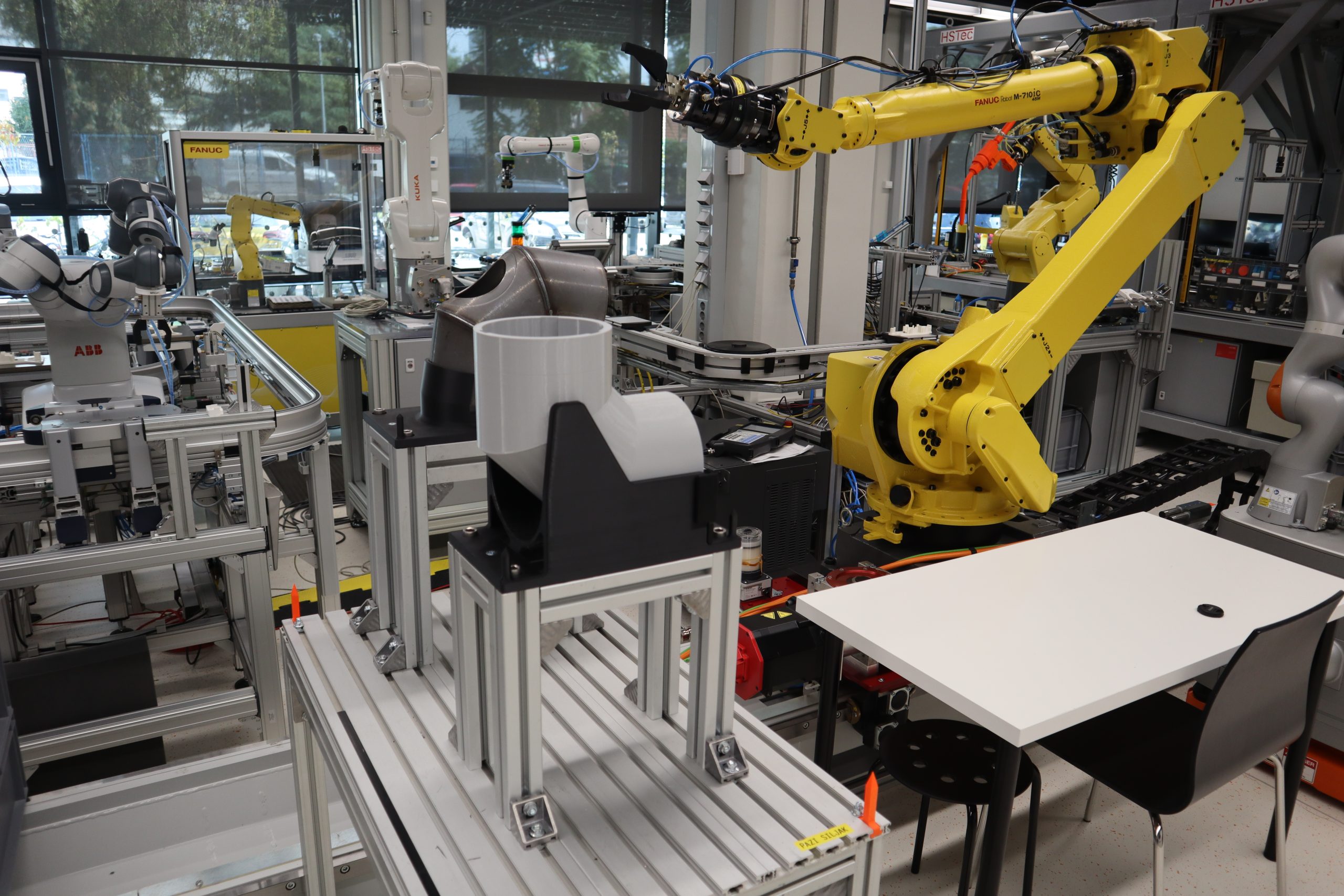
 The project was co-financed by the European Union from the European Regional Development Fund
The website was co-financed by the European Union from the European Regional Development Fund.
The content of the website is the sole responsibility of the Faculty of Mechanical Engineering and Naval Architecture.