


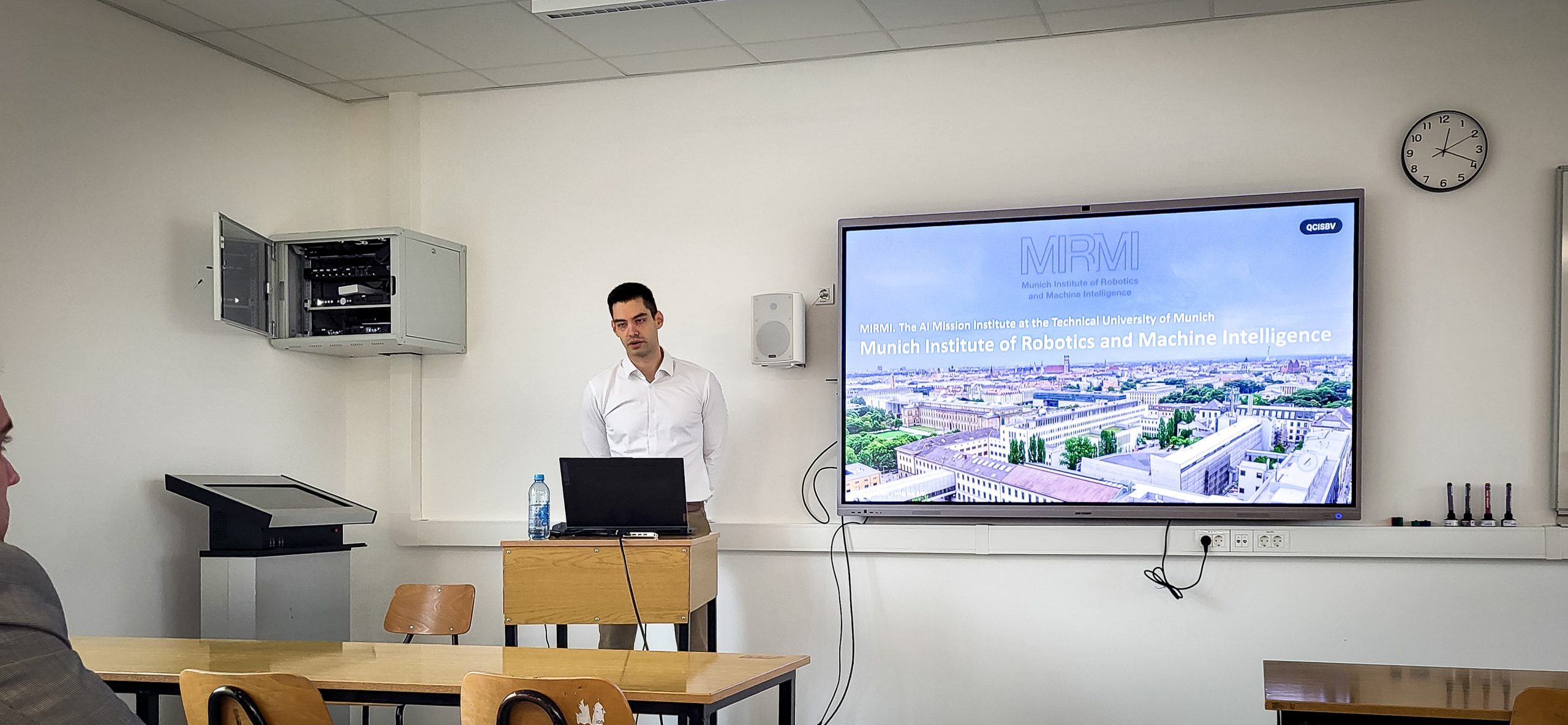
On Tuesday, January 27, 2026, at the college Robotics – at the Faculty of Mechanical Engineering and Naval Architecture An invited lecture was held by dr. sc. Luka Mišković.
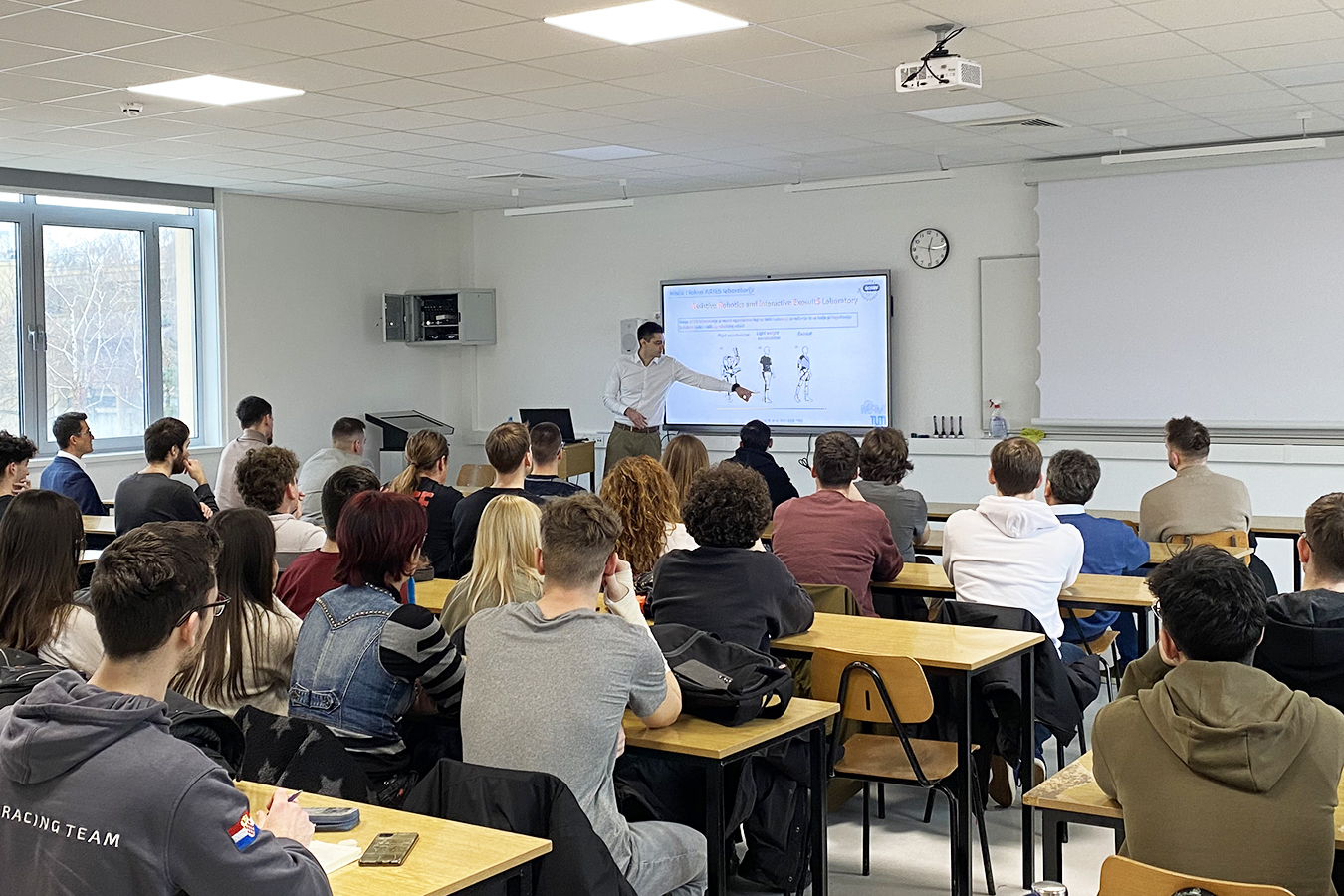
The lecture was held during the first hour of class and brought together students interested in contemporary topics in the field of wearable robotics and human-robot interaction.
Dr. sc. Luka Mišković is an alumnus of the Faculty of Mechanical Engineering and Naval Architecture, (graduated in 2020), and today works as a senior postdoctoral researcher and hardware team leader in the Intelligent Biorobotic Systems group at the Technical University of Munich (TUM). His professional and scientific path represents a strong example of the success of FSB alumni on the international scientific and research scene and confirms the quality of education and research environment that the Faculty provides to its students.
In a lecture entitled "Improving human performance using soft wearable exoskeletons and machine learning" Dr. Mišković gave an overview of the field of wearable robotics, which represents the fusion of humans and robots through direct physical interaction with the human body. Special attention was paid to the role of exoskeletons in the rehabilitation of people with functional impairments, but also their application in healthy users with the aim of increasing strength, endurance and movement efficiency.
The central part of the lecture presented the development and experimental testing of soft load-bearing exoskeletons developed at TUM, as well as modern control strategies based on machine learning methods.
The emphasis is placed on adapting the level of assistance to the individual needs of the user, thereby achieving more natural movement and better integration of the robotic system with the human body. Research results are also presented, indicating the potential for the application of such systems in rehabilitation, gait assistance, and the improvement of human performance in various work and everyday environments, thus providing better insight into current challenges and future directions of professional development.
The lecture provided students with valuable insight into current research and technological challenges in the field of wearable robotics, as well as into practical aspects of developing robotic systems that interact directly with humans, and stimulated discussion about future directions for the development of this interdisciplinary scientific field.
The active participation of students and the discussion that followed further confirmed the importance of such lectures in connecting teaching content with current scientific research work and opportunities for further professional development.
 The project was co-financed by the European Union from the European Regional Development Fund
The website was co-financed by the European Union from the European Regional Development Fund.
The content of the website is the sole responsibility of the Faculty of Mechanical Engineering and Naval Architecture.